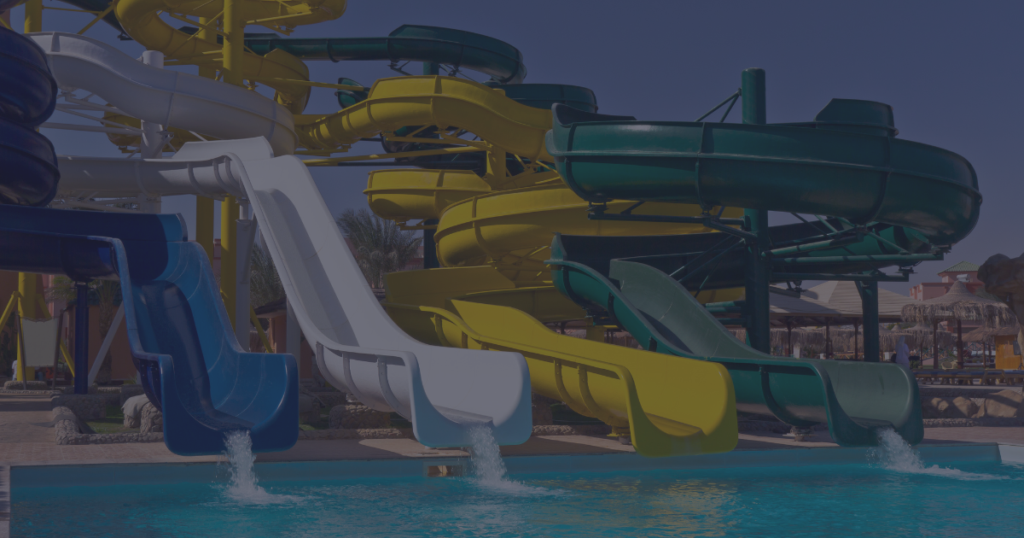
Water parks are designed to provide safe recreation for families. Unfortunately, serious accidents sometimes occur.
An injury at a water park may involve far more than a simple slip-and-fall. These cases may involve multiple parties who may share responsibility for an accident.
I have represented clients who have suffered serious injuries at water parks, including a waterslide injury claim that settled for more than $2 million.
If you or a member of your family has been injured at a water park, it is important to understand your legal rights and the steps you should take to protect them.
Can You Sue After a Waterslide Injury in British Columbia?
Yes. If an injury is caused by negligence, unsafe conditions, defective equipment, improper maintenance, inadequate supervision, or another party’s failure to take reasonable care, a claim for compensation may be available under British Columbia law.
Depending on how the accident occurred, responsibility may extend beyond the water park itself to include manufacturers, engineers, contractors, maintenance companies, or other parties involved in the design, construction, operation, or maintenance of the facility.
Every case depends on its own facts. One of the first steps is determining how the accident occurred and identifying every party who may be legally responsible.
Understanding Waterslide Injury Claims
Many people assume a waterslide injury is simply an accident.
In my experience, serious waterslide injury claims frequently involve engineering issues, inadequate inspections, equipment failures, poor maintenance, employee training, or failures to comply with safety regulations.
Waterslide cases often require investigation into how the slide was designed, constructed, maintained, inspected, and operated.
Important evidence can disappear quickly. Surveillance videos may be overwritten, equipment may be repaired or modified, and witnesses become more difficult to locate as time passes. Some of the most important evidence is obtained in the days immediately following the accident.
What Causes Waterslide Accidents?
Every accident is different, but common causes include:
- Improper waterslide design
- Manufacturing defects
- Inadequate maintenance or repairs
- Failure to inspect equipment
- Improper water flow
- Structural failures
- Unsafe landing pools
- Inadequate warning signs
- Inadequate employee training
- Failure to properly instruct riders
- Failure to enforce safety procedures
- Collisions between riders
- Dangerous property conditions
- Defective electrical systems or other unsafe infrastructure
Serious waterslide accidents are often caused by several failures occurring together. Determining what happened usually requires a careful investigation supported by the appropriate experts.
What Types of Injuries Can Occur at a Water Park?
Although many water park injuries are relatively minor, some result in catastrophic injuries.
These may include:
- Brain injuries
- Concussions and traumatic brain injuries
- Spinal cord injuries, including paraplegia and quadriplegia
- Neck and back injuries
- Broken bones and fractures
- Shoulder, knee, and joint injuries
- Internal injuries
- Severe lacerations
- Near drowning
- Drowning
- Electrical injuries or electrocution resulting from defective electrical systems or equipment
- Fatal injuries
Serious waterslide accidents may involve high-speed impacts, falls, collisions, or riders being unexpectedly ejected from the slide.
I have represented clients with catastrophic brain injuries, severe spinal cord injuries, and other life-altering injuries resulting from serious accidents. Brain injuries, in particular, may not always be immediately recognized, making early medical assessments important.
Who May Be Responsible for a Waterslide Injury?
Responsibility for a waterslide accident may extend beyond the water park itself.
Depending on the circumstances, potentially responsible parties may include:
- The water park owner or operator
- The parent company
- Waterslide designers
- Waterslide engineers
- Waterslide manufacturers
- Maintenance contractors
- Inspection companies
- Lifeguards
- Water park supervisors
- Employees responsible for operating the attraction
- Municipalities operating public water parks
- Contractors providing specialized services
- Another park patron whose negligence contributed to the accident
One of the first steps in any serious claim is identifying every party who may be legally responsible. Failing to do so early in the investigation may affect the claim.
Waterslide Injury Laws in British Columbia
Several areas of law may apply to a serious waterslide injury claim. Depending on how the accident occurred, your claim may involve occupiers’ liability, negligence, product liability, or a combination of all three.
Determining which laws apply is an important part of building a successful case.
What Is Occupiers’ Liability?
Under British Columbia’s Occupiers Liability Act, owners and operators of water parks have a legal duty to take reasonable care to ensure that visitors using their property are reasonably safe.
This duty extends well beyond simply keeping the water park grounds clean.
Water park owners and operators must:
- Ensure waterslides are operated and maintained in accordance with applicable safety requirements
- Repair dangerous conditions
- Follow safety regulations
- Properly train their employees on how to operate the slides, and instruct users on safety issues
- Have a duty to warn patrons about dangers and risks in using the slides.
When a water park fails to meet these responsibilities, and someone is injured as a result, the owner or operator may be legally responsible for the injuries that follow.
Not every accident means a water park has been negligent. However, where reasonable safety precautions were not taken, a claim for compensation may be possible.
What Is Product Liability?
Not every waterslide accident is caused by the operation of the park.
A waterslide, its components, or related equipment may have been improperly designed, defectively manufactured, or supplied without adequate warnings or instructions.
When that occurs, a product liability claim may exist.
Over the course of my career, I have acted in numerous product liability cases involving defective automobiles, motorcycles, bicycles, medical devices, retail equipment, special event structures, highway design, and other complex engineering issues. Product liability claims often require detailed investigation and expert engineering evidence. These cases frequently involve engineers, accident reconstruction specialists, and other technical experts.
Water park product liability lawsuits are generally based on:
- Manufacturing defects
- Design defects
- Inadequate warning defects
Unlike some personal injury claims, these cases often require investigation into manufacturer specifications, engineering drawings, testing records, maintenance history, and industry safety standards.
Because product liability claims are highly technical, they should be investigated as early as possible.
How Do You Prove Negligence?
In order to obtain compensation for a waterslide injury case, it is generally necessary to prove that another party was negligent. There may be multiple parties who are responsible for a waterslide accident.
Although every case is different, negligence usually requires proving four basic elements:
- The defendant owed you a duty of care.
- The defendant breached that duty by failing to act reasonably.
- That breach caused or contributed to your injuries.
- You suffered damages as a result.
While those legal principles appear straightforward, proving them often requires extensive investigation.
Who Are the Liable Parties at a Water Park?
There may be multiple parties who are responsible for a waterslide accident.
Potential defendants in a water park injury lawsuit may include:
- Water park owner and operator,
- Waterslide engineers,
- Waterslide manufacturers
- Water park employees,
- Lifeguards,
- Lifeguard and safety trainers,
- Water park supervisors,
- The parent company that owns the water park,
- Municipal water parks,
- Other water park patrons,
- Third parties who contract with the water park to provide goods or services,
Your lawyer must do an exhaustive search of parties potentially responsible and include them in the lawsuit.
Does Improper Water Park Employee Training or Supervision Matter?
One of the most overlooked causes of waterslide accidents is inadequate employee training.
Water parks rely on employees to monitor rides, control rider spacing, provide safety instructions, recognize dangerous situations, and respond appropriately when problems arise.
When employees are not properly trained or supervised, serious accidents can occur.
Examples may include:
- Failing to properly instruct riders before they enter a slide
- Allowing riders to enter too closely together
- Ignoring unsafe behaviour
- Failing to recognize hazardous conditions
- Not following established operating procedures
- Inadequate supervision by management
This involves the law firm researching details on all manufacturer’s instructions, training manuals, and evidence of individual training.
We settled one case recently where video evidence we obtained showed clearly that the employees were not instructing the patrons of the proper method to enter and use the slide. The employees were not properly trained by the operator. We obtained evidence from social media and obtained videos from various sources.
We settled that case for over $2 million.
Unsafe Property Conditions at Water Parks
Like any other property owner, water park operators must maintain their premises in a reasonably safe condition.
In a water park, safety hazards may include:
- Slippery walking surfaces without adequate warnings
- Damaged stairs or handrails
- Broken or deteriorating slide surfaces
- Improper water flow
- Shallow landing pools
- Damaged safety barriers
- Inadequate fencing
- Defective electrical systems
- Improperly maintained pumps or filtration equipment
- Exposed, hard surfaces near ride exits
- Poor lighting
- Inadequate warning signs
Some hazards develop gradually over time through poor maintenance. Others arise because inspections are not performed properly or identified hazards are not corrected promptly.
Determining whether the operator knew, or ought to have known, about a dangerous condition is often an important issue in the case.
Can More Than One Party Be Responsible for a Waterslide Injury?
Yes. Many serious waterslide injury claims involve multiple defendants.
For example, the water park operator may have failed to maintain the ride properly, while the manufacturer may also have supplied a defective component.
An engineering contractor may have made design errors, while employees failed to follow proper operating procedures.
In these situations, responsibility may be shared among several parties.
One of the first responsibilities of an experienced lawyer is identifying every potentially responsible defendant and preserving evidence before it is lost.
Doing so can make a significant difference in the outcome of the claim.
What If Another Person Caused the Water Park Accident?
Not every waterslide accident is caused by the water park itself.
Sometimes another guest’s actions contribute to an injury.
Examples may include:
- Ignoring employee instructions
- Entering the slide too early
- Failing to wait for clearance before starting
- Reckless or dangerous behaviour
- Colliding with another rider
In these situations, the other individual may be legally responsible.
However, the water park may also share responsibility if employees failed to supervise riders properly, failed to enforce safety rules, or allowed unsafe practices to continue.
More than one party can be responsible for the same accident.
Assumption of Risk: Can a Water Park Avoid Responsibility Because the Activity Is Inherently Risky?
Water parks facing an accident lawsuit may argue that visitors voluntarily accepted the risks associated with using waterslides, an inherently risky activity.
This legal principle is sometimes referred to as the assumption of risk.
Every recreational activity indeed carries some level of inherent risk. However, that does not excuse negligence.
Visitors accept the ordinary risks associated with using a waterslide. They do not accept unnecessary risks created by unsafe design, defective equipment, poor maintenance, inadequate employee training, or failures to follow established safety procedures.
If a water park or another responsible party increased the risk beyond what a reasonable visitor should expect, they may still be legally responsible for the resulting injuries.
Does Signing a Waiver Prevent You from Making a Claim?
No. Signing a waiver does not necessarily mean you can’t make a claim if you are injured at a water park.
Many water parks require visitors to sign a liability waiver or include waiver language as part of the online ticket purchase process.
Some people assume that signing this waiver automatically prevents them from bringing a legal claim. That is not always the case.
Whether a waiver is enforceable depends on many factors, including:
- How the waiver was written
- Whether it was brought to the visitor’s attention
- The circumstances in which it was signed
- The nature of the negligence being alleged
- Whether public policy affects its enforceability
Special issues also arise when children are injured.
In many situations, waivers signed by or on behalf of minors may not prevent a claim from proceeding.
Every waiver should be carefully reviewed by an experienced lawyer before concluding that a claim cannot be pursued.
How Are Water Parks Regulated in British Columbia?
Technical Safety BC administers the Safety Standards Act and the Elevating Devices Safety Regulation, which governs amusement rides, including flume rides and waterslides.
These regulations address matters such as:
- Design requirements
- Construction standards
- Operation
- Maintenance
- Inspection procedures
- Record keeping
- Alterations and repairs
- Daily safety inspections
- Documentation of maintenance and incidents
Manufacturers also play an important role by providing operating instructions, inspection procedures, maintenance requirements, and safety recommendations.
These records often become important evidence when investigating how an accident occurred.
Understanding these regulatory requirements can be an important part of determining whether appropriate safety standards were followed.
What Should You Do After a Waterslide Accident?
The steps you take immediately after a water park accident may have a significant impact on your legal claim. If possible, you should:
- Seek medical attention immediately.
- Report the accident to water park management.
- Ask that an incident report be completed.
- Take photographs of the accident scene and your injuries.
- Obtain the names and contact information of witnesses.
- Preserve your admission ticket, wristband, receipts, and any other documentation.
- Keep the clothing and footwear you were wearing at the time of the accident.
- Avoid discussing fault or providing recorded statements to insurance representatives before obtaining legal advice.
- Contact an experienced, personal injury lawyer as soon as possible so important evidence can be preserved.
In many cases, surveillance videos, maintenance records, inspection reports, and other critical evidence may only be available for a limited period.
Understanding Complex Waterslide Injury Claims
Waterslide injury claims are among the more technically complex personal injury cases.
Unlike many other accident claims, they often require an understanding of engineering principles, product liability law, occupiers’ liability, safety regulations, maintenance practices, and catastrophic injury litigation.
Over the course of my career, I have represented clients with serious brain injuries, spinal cord injuries, product liability claims, and complex medical negligence cases throughout British Columbia and Alberta.
I have also acted in numerous product liability cases involving automobiles, motorcycles, bicycles, medical devices, highway design, recreational equipment, and other complex engineering issues.
This experience has shown me that many serious waterslide injury claims involve multiple causes that are not immediately obvious.
Serious waterslide injury claims require a thorough investigation.
Frequently Asked Questions
- How long do I have to start a waterslide injury claim?
- Time limits apply to personal injury claims in British Columbia, and failing to act within those time limits may prevent you from pursuing compensation. Because every situation is different, it is important to obtain legal advice as soon as possible after an accident.
- What compensation may be available after a waterslide injury?
- Depending on the circumstances of your case, compensation may include pain and suffering, past and future income loss, medical expenses, future care costs, housekeeping losses, out-of-pocket expenses, and other damages recognized by the courts.
- What if my child was injured?
- Children who suffer serious injuries at a water park may have legal rights even when a parent signed a waiver or purchased admission online. These situations require careful legal analysis, and families should obtain legal advice before assuming they do not have a claim.
- How much does it cost to speak with a lawyer?
- We provide a free initial consultation to discuss your circumstances and determine whether you may have a claim. Many serious personal injury claims are handled on a contingency fee basis, which means there are no legal fees unless compensation is recovered.
Contact Our Team
Paul Mitchell, K.C., has represented seriously injured clients throughout British Columbia and Alberta for more than 45 years. During that time, he has successfully resolved numerous multi-million-dollar catastrophic injury claims, including a waterslide injury claim that settled for more than $2 million.
His practice is limited to serious personal injury claims and art law, with extensive experience in catastrophic injury, brain injury, spinal cord injury, product liability, and medical malpractice claims.
If you or a member of your family has been seriously injured, contact Paul directly at 250-869-1115 or mitchell@pushormitchell.com.